Lights, Words, Action
The cinematic influences on The Tulip Poplars.

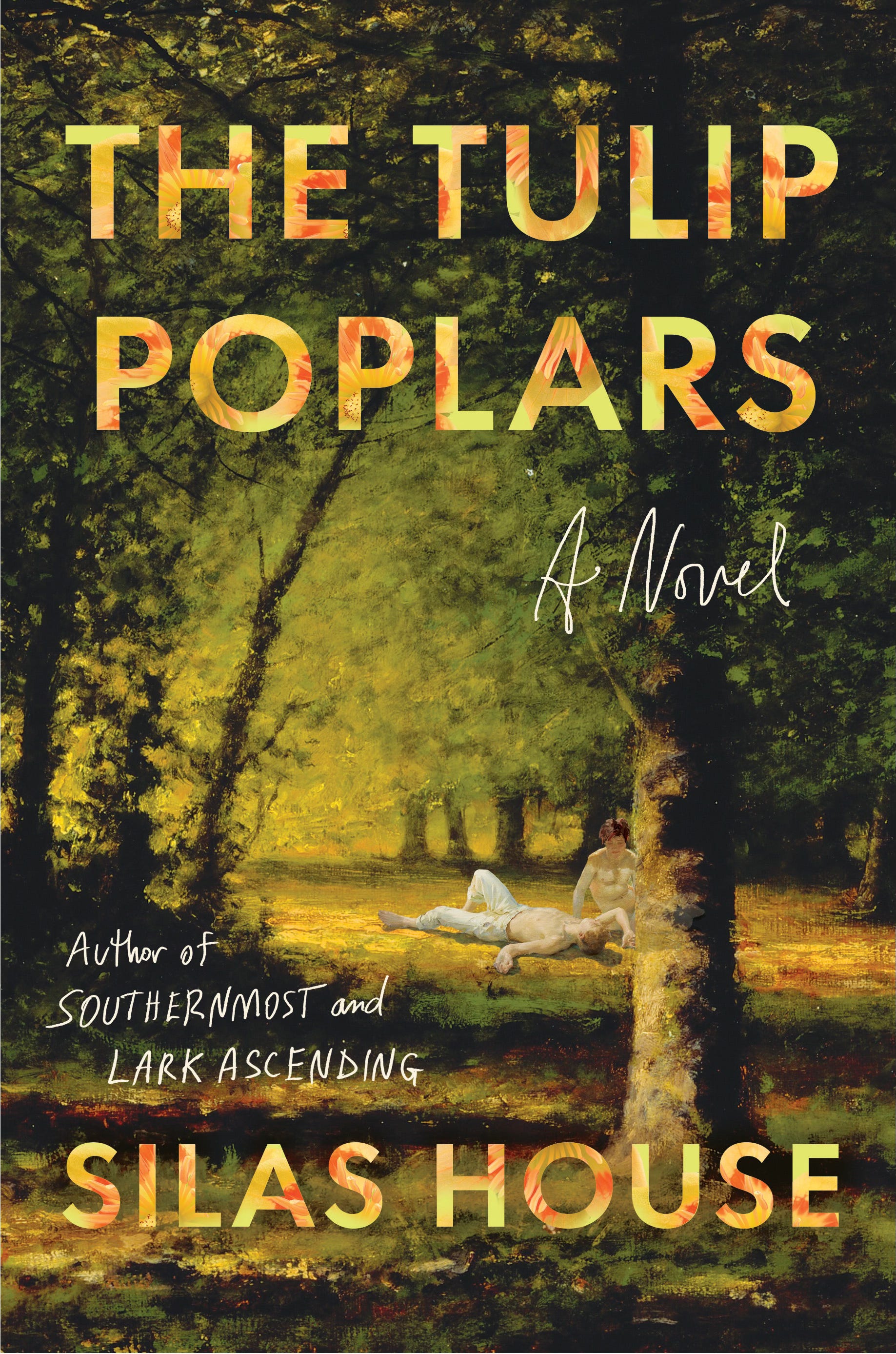
Note: We don’t have enough love stories these days, so I wrote one. In my forthcoming novel, The Tulip Poplars, I follow two couples—one gay, one interacial—who are up against tremendous odds to be together. I always wanted to write a sweeping, epic story, and in The Tulip Poplars I finally managed to do it. In a series of posts between now and publication date (October 13) I’ll be talking about the influences and inspirations for the novel. This time I’m looking at the influence of cinema on the novel. I welcome questions in the comments section.
My love for cinema was fostered by my aunt, Sis, who influenced me tremendously as a young artist. When we went to the movies or watched TV, we watched what she wanted to watch, which gave me an early education in films that most young people were not watching at the time.


Our local movie theater was the Corbin Cinema, which had two screens, upon which the same two movies played for at least two weeks (I remember that E.T. took over one screen for months because people kept going to see it). Children’s movies were not as ubiquitous as they are now, and the films shown at the Corbin Cinema were sometimes blockbusters but just as often they were quiet films that catered to rural, working class audiences. I saw some of my favorites of the period there, including dramas like Coal Miner’s Daughter, Tender Mercies, Urban Cowboy, Witness, Norma Rae, Terms of Endearment, and The Trip to Bountiful, simply because they were the films Sis wanted to see. But two in particular during that time became influences on my forthcoming novel, The Tulip Poplars.
I was only thirteen when I saw Places in the Heart, and it certainly wasn’t made for a boy my age, but I loved it so much that I saw it not only with Sis but also forced two of my best friends to go back and see it with me. They didn’t really feel it as deeply as I did but they were good friends, so they hung in there for me. Places in the Heart has a terrible title, sounding more like a Hallmark Movie of the Week, but it was a huge critical success, and it still holds up today, with a tornado sequence that is among the most powerful weather scenes ever put on film, with very little in the way of special effects. It was nominated for seven Oscars and won two, including one for the legendary lead performance by Sally Field (who famously accepted it by exclaiming “You like me!”).
I could go on at length about this film but the main reason it became an influence on this novel is the way it looked at racism in a small Southern town. I am from a sundown town, which was the site of a notorious white riot in 1919 known as the Corbin Expulsion. Although the novel is not about this terrible event, the riot is a plot point in the book that sets a lot of its action into motion. The opening scene of Places in the Heart shows a white sheriff being accidentally shot by a young Black man. The townspeople immediately lynch him, then drag his body to the sheriff’s wife so she can see what they have done. They’re surprised to find that she is not pleased. Later, the town is shocked when she takes in a Black man to help her raise the crops, leading the KKK to terrorize her family.
The film is a memoir; its director, Robert Benton, is looking back on his own childhood. I think it must have been this film that first made me think I wanted to write about the way racism shaped my childhood. But it took me many years to figure out how I could best do that with exploiting someone else’s experience or story. I believed I managed to do it in this book.
I was also struck by the way it uses gospel music throughout, as in the beautiful opening that is setting up so much of the film for us. I loved its white shots that showed the beauty of rural spaces, capturing the way the air feels by showing gently lifting tree limbs or bending grasses in a breeze, the way the light falls through the leaves. I appreciated the way it explored fidelity and forgiveness (in its moving last scene all the film’s characters—even the ones who have died and the ones who would not be allowed to sit together in the Jim Crow South—take communion together). Most of all, I loved the complexity it brought to these working class and poor rural characters, who were full human beings and never caricatures. I was thinking of all these things while writing The Tulip Poplars.
But I also wanted The Tulip Poplars to be a sweeping story. An epic that spanned six decades and showed a changing Appalachia and America. I wanted to suggest wide vistas. I hope the book feels as if it plays against a wide canvas. The kind of novel that would need to be a big screen experience. So of course I was thinking of the films Sis and I watched on her solid wood floor console television that must have weighed half a ton. Much like we only had two screens at the local cinema, we only had seven channels for most of my childhood: CBS from Hazard, ABC and NBC stations from both Lexington and Knoxville, WGN, and WTBS. The latter two mostly played reruns of television series and, best of all, classic movies.
That’s where I would have first encountered the astounding work of director David Lean. Two of his films became influences on The Tulip Poplars.
Ryan’s Daughter, released in 1970, is a loose retelling of Madame Bovary, but set in Ireland in the year following the Easter Rising. It is a story of forbidden love—the main theme of The Tulip Poplars—because the titular character, a small-town Irish woman, falls in love with a British soldier, which has ramifications that change the community forever. The film was judged harshly by critics but was a huge box office success, and although I see the issues with it (especially some of the stereotypical portrayals of Irish people), I still admire its cinematography, performances, sound designs, production design, and so much more. It’s wide shots of the Irish coast and mountains are breathtaking, something I try very hard to achieve in passages from my novel. Watch this short scene and think about the way Lean is immersing us in the place.
We feel as if we are on that beach and in that little town. Look at how he captures the shadows of clouds on the land and ocean. I can feel the ocean wind in this scene. I can feel the salt in the air. A film has many elements that conjure these sensory effects—sights, sound effects, music, camera angles—but in a novel, the writer has only their writing. To create a cinematic experience on the page I must first observe intensely, which is why I tell anyone who wants to know that writing is fifty percent observation and fifty percent writing. I must pay attention to the way clouds move across landscapes in a way a non-writer would not. My hope is that what I see in my head transfers to the page so that my reader travels to the locals of The Tulip Poplars, which range from mostly Eastern Kentucky to other places such as Brooklyn, Greenwich Village, Lexington, Louisville, and Cincinnati.
Lean’s more famous film is Doctor Zhivago (1965), another forbidden love story with wide vistas. So, just what I needed to watch to help me capture these same things. Again Lean is using locale, weather, sound, and much more to place the viewer solidly where he wants them to be. There is the famous sleigh scene that takes us to the Russian winter:
Since a large part of the action of The Tulip Poplars happens from 1918 to the 1930s, my characters are often traveling by train. In each instance I wanted the reader to feel the action of the train arriving into the station and rattling down the tracks. I wanted them to see the passing landscape and smell the soot from the coal-fired engine. Watching the many train scenes from this film helped me to conjure that on the page.
One of my favorite directors is Terence Davies. He’s best known for memoir films like Distant Voices, Still Lives and The Long Day Closes and period pieces like Benediction and The House of Mirth. Sunset Song is his most controversial film, with some of his admirers dismissing it, but I think it is a powerful rural epic about the strength of a woman up against terrible obstacles. Few films conjure community, and especially what’s great and terrible about a close-knit community, as well as this one does. There’s one scene in particular int he film that destroys me because it is so beautiful. It’s simply different groups of people in the place walking to church together. Somehow it takes me back to the Sundays of my own childhood. But it is also a scene that gives so much dignity to agricultural people, and one that shows the countryside in such a beautiful way. The scene is overlaid with a chorale performance of “All in the April Evening” but listen for perfectly-placed church bells in the distance at the end of the one-minute scene. I wanted scenes in The Tulip Poplars to play like this in the readers’ minds:
Another film that Sis took me to the cinema to see as a boy that I most likely would not have seen otherwise is The Color Purple, which came out in 1985, when I was just turning fourteen. The novel is one of my favorites and probably the book that changed me the most, but I read it as early as I did because of this powerful film. Historically epics like this that play out over many decades with large casts of characters focus on white people but The Color Purple introduced a new kind of epic. Spielberg employed many of the devices used by directors of epics past to make sure the audience understands that this is a generations-spanning saga, often using wide shots, overheads, and large pans to create the feeling of a large canvas. Note this long shot (no cuts) that follows Shug and Celie as they walk through a field of purple flowers while Shug talks about her definition of God. It is lush and bright. We are luxuriating int he beauty of the world that Shug is celebrating. Notice the sound design: a perfect layering of their footsteps, birds and insects, and a church choir singing in the distance.
To write a scene like that I would have to imagine all of the the variables at play. Not only the swaying purple flowers, the costumes of the characters, what props they might be carrying (the umbrella), but also think about the way the sun would have felt on their faces. I would need to concentrate on what they are smelling, the textures at hand, and what sounds are important for the scene. Somehow I must weave all of that together in a way that doesn’t make the reader feel overloaded by descriptive writing yet immersed in the scene. The Tulip Poplars is also a subtle environmental story about the connection between nature and the spiritual. I hope I created scenes that approach the beauty, subtlety, and profundity of a perfect scene like that one from The Color Purple.
The last film on my list that I think of as being hugely influential on The Tulip Poplars is one from the classics Sis and I watched on WTBS or WGN. How Green Was My Valley is a John Ford masterpiece from 1941 that centers on a Welsh coal mining village undergoing a change in its way of life. Its a nostalgic but gritty film that was nominated for ten Oscars and is widely considered a classic. It is another example of giving dignity and complexity to rural working class characters, using music to inform the viewer, and showcasing the importance of sense of place. Notice in the following scene how the landscape is always there, even when its in the background. Looming mountains, old trees and wide pastures. In this scene, a coal miner’s daughter, Angharad Morgan, leaves the church after marrying the wealthy mine owner’s son even though she is in love with the village pastor. Only her face and body language tell us of her despair, and then we get the sad shot of him watching from the trees.
So much is conveyed in such a short scene. Yet once again I must remind you that the filmmakers have much at their disposal—cinematography, music, costumes, the movement of the camera, the screenplay, the performances—to get across what they want the viewer to know.
In a novel, it’s just me, working with words to try to create these scenes in readers’ minds, to take readers to a place and time, to elicit an emotional reaction to the action at hand. I hope I did that in The Tulip Poplars, and if I did it’s because films like these helped me to understand how to attempt to do it, and reminded me of the tools at my own disposal to help me put on the page what I am seeing on the screen of my own mind.
I hope my new novel will feel like a cinematic experience to you in that it plays out in your mind, but I want it to be a literary experience in the way that everything is conjured through the words. That’s what I love most about writing and hopefully it’s what readers love the most about reading. Film and literature are different beasts, but one can inspire the other, and cinema has certainly been an influence on my own writing, thanks to that little cinema with two screens, to classics on TV, and to my film-loving aunt who helped shaped my cinematic mind.
Preorder The Tulip Poplars.
Silas, thanks so much for sharing all of these wonderful influences that helped shape your writing. You certainly do have a way of bringing cinematography alive through the pages of your books. Allowing the reader to be present. Places in the Heart also had a huge impact on me and still goes down as one of my all time favorite movies.
I recently picked up a copy of The Welsh Girl at my local bookstore based on your July post on influences.