Why Poetry?
How "Trees", Wordsworth, Millay, Natalie Wood, My 7th Grade English Teacher, and others turned me into a poet; how I hunkered down to do the work; and why now.

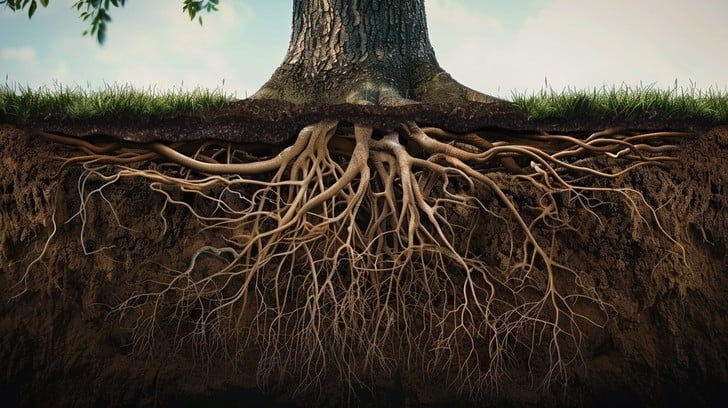
I must have been in fourth grade when I learned my first poem. I suppose “Trees” by Joyce Kilmer was taught to most school children back then, and although its rhymes are simple and its reasoning romantic, there is profundity and resonance within its short lines that move the reader and state a truth that most of us would agree with: no manmade art can compete with the beauty and mystery of nature. Published in 1931, it remains one of the most widely read poems of all time and has been so popular over the years that it even became a much-recorded song. My favorite recording of it is the one by Mario Lanza.
All these years later, the poem continues to be a touchstone for me. As a child I felt like it was articulating something that I was unable to. I believe that is one of the great responsibilities of writers; we are meant to examine abstract notions that most people struggle to articulate and put them into words. As a nine year-old I already understood the power a poem could hold, and I was deeply moved by the poem, which I learned by heart. But it wasn’t until I was twelve, and in seventh grade, that I witnessed someone else being deeply moved by poetry.
I’ve often talked about my English teacher, Sandra Stidham, who was known as a rigorous but caring teacher. She could strike fear in the hearts of her students with one glance or soothe them with quiet loving and encouragement. I remember it being the first day of class (it may not have been; memory is tricky that way) when she stood before the class and read Edna St. Vincent Millay’s “God’s World,” published in 1917. The poem began “O world, I cannot hold thee close enough!” and continued to center on the way that the natural world was too beautiful to bear. I had sometimes felt this way, too. Even now I often mourn the loss of some wonderful thing before it has even began to pass on. This is a concept that was famously explored in a scene from the 1999 film American Beauty when a character watches a plastic bag and leaves being blown about in the wind and is moved to say: “Sometimes there’s so much beauty in the world I feel like I can’t take it, and my heart is just gonna cave in.”
Ms. Stidham finished the last lines of the poem:
Thou’st made the world too beautiful this year;
My soul is all but out of me,—let fall
No burning leaf; prithee, let no bird call.
And I was amazed to see tears in her eyes. I had never before seen an adult moved by a piece of literature other than the Bible, and this one moment gave me permission to no longer hide my love for the written word that I had carried with me as long as I could remember. I think it was also instrumental in me becoming a writer myself. Ms. Stidham did lots of things that school year that helped launch me. She recognized that I thought like a writer, she brought in books from her personal library and loaned to us, she read my short stories I was secretly writing and gave me feedback. It only takes one teacher who is going the extra mile to unlock something in us, and she was the main teacher who did that for me. There were others, but none of them made the impression that she did.
Around this same time I had discovered William Wordsworth. I was constantly watching old movies on TBS and one they ran often was the beautiful 1961 melodrama Splendor in the Grass, written by William Inge (who would later become one of my favorite playwrights with plays like Come Back Little Sheba, Picnic, Bus Stop, and others). I related to the way the film explored rural life, sexual repression, and manic depression—all things I was familiar with in our little town—and a large waterfall even served as a central set, which I also loved because nearby Cumberland Falls was the site of many of my own teenage adventures.
The film’s title comes from a Wordsworth poem that is recited a couple times and I was so taken by the movie that I sought out the poet and became especially enthralled by his poem “The World is Too Much With Us”, which explored the way people had chosen industrialization over nature. This held special power for me since at the time I was seeing my community be overtaken by a strip mine that not only led to noise and water pollution but also destroyed our roads and even relationships between neighbors.
I found Whitman, poems that have also stuck with me throughout my life. Through my love for The Color Purple I discovered the poetry of Alice Walker. I loved Robert Frost, Carl Sandburg, Lucille Clifton. James Still’s poems helped me to understand the culture I was from in a deeper way. His poem “I Was Born Humble” once again helped me to understand my deep connection to the natural world. His “Death of a Fox” made me meditate more deeply on how to be more empathetic.
More and more I was finding that poetry could put into words my strongest and hardest-to-grasp emotions. I filled notebooks with my own (bad) poetry and (slightly better) short stories. The short stories immediately garnered more praise from the few people I allowed to read them and so gradually I began to focus more on prose. I spent years reading and studying fiction, eventually surrendering to it completely. My first publications were stories and I started a novel in college; six years after graduating it was published and I became known as a fiction writer. Occasionally I wrote a poem but I mostly kept them in my notebooks; over the years I published only a few poems in small literary journals.
During the hardest period in my life, when I went through a tumultuous divorce and simultaneously came out, poetry was a balm that carried me through. Especially Mary Oliver, whose words seemed to have been written just for me during this rough time. Her poem “Wild Geese” has saved lives, and along with books, music, films, dogs, the natural world, and a handful of people, it saved mine, too. The opening line of the poem, “You do not have to be good” was a life changer for me. I was raised in a strict fundamentalist sect that taught me the only way to be good was to deny most of what made me a human being, that the way to be good was to judge others and help them see the error of their ways. The poem goes on to encourage the reader to accept themself and to celebrate themself. A piece of literature was once again there for me when I needed it most.
So, about fifteen years ago, I started taking poetry more seriously. In 2008 I wrote a play called Long Time Traveling that was about a mechanic who realizes he is a poet so he decides to quit his job and pursue his passion, much to the chagrin of his wife. This change illuminated the huge divides in their relationship. It was not only about marriage but also a metaphor about the way so many people I knew were resistant to change with the election of Barak Obama, simply because of race. Because the main character writes—and recites—some of his poetry in the play I felt this gave me the perfect excuse to start taking some poetry classes myself. I had never been formally trained to write it the way I had been fiction (I earned an MFA in Creative Writing focused on fiction-writing from the Naslund-Mann Graduate School of Writing).
Malcolm Gladwell made famous the concept that to achieve true expertise in any skill a person has to practice the craft for at least 10,000 hours. Well, I’m not sure I agree that there is a set time one must invest but I do know that to do something well you have to spend as much time as possible studying it, learning everything you can about it, practicing it. So that’s what I did with poetry. I took classes offered by poets I admire like Maurice Manning and Marianne Worthington and sat in on lectures by great poets like W.S. Merwin, Kathleen Driskell, Rebecca Gayle Howell, Crystal Wilkinson, George Ella Lyon, Greg Page, Molly Peacock, and others. I studied closely the work of essential poets like Seamus Heaney, Elizabeth Bishop, Lyrae Van-Clief Stefanon, Eavan Boland, Donald Hall, Ada Limón, Frank X Walker (whom I especially admire for the way he uses the human story to comment on larger social issues), Nickole Brown, Jane Kenyon, and Paisley Rekdal. I picked the brains of acclaimed poets I was fortunate to be in conversation with, such as Wendell Berry, Jane Hicks, bell hooks, Barbara Kingsolver, Ron Rash, and Lisa Parker. I attended the readings of as many poets as I could. Most of all, I read and I wrote. And wrote and wrote, learning from my mistakes, leaning on the generosity of friends and family who read the poems and gave me feedback. My poems were mostly rejected by the magazines and journals I submitted them to but a few were published here and there. I was fortunate in that a couple of my poems gained a large life online. For the past few years my poem “New Year Prayer” gets shared often on New Year’s Day. When Loretta Lynn passed away my poem “At the Opening of Coal Miner’s Daughter” was widely shared on social media and reposted by several country music stars, which allowed it to gain even more traction. Some of the poets mentioned above encouraged me to keep writing poems, and their belief in me was pivotal. Still, I wanted to make sure that I felt confident in what I was doing, that I did not feel like a fraud when I called myself a poet, before I started reading poems in public or even thinking about the idea of putting together a collection. So I kept my head down, and I kept studying and writing.


But then, in 2023, Governor Andy Beshear appointed me as Poet Laureate for the Commonwealth of Kentucky for two years. Immediately some people questioned this designation, saying that I shouldn’t have been chosen because I wasn't a poet. What they were really saying is that I wasn’t known as a poet, but as a fiction writer. That’s an unfair judgement, I think. Just because they didn’t know I had seriously studied the craft for years was all the determination they needed. Is a poet still a poet if they have not published a book of poetry? I would say they are. Besides, in Kentucky, it is not a requirement to be poet to be named as Poet Laureate and other writers primarily known for prose had preceded me. Still, the sting of rejection from some made me want to get more of my poetry out there.
When the governor was elected for a second term he asked me to write a poem for his second inauguration. Writing an occasion poem is a daunting task because a poem is usually organic in nature. This one, in particular, had to speak to as many people as possible. I rarely write with an audience in mind and instead focus on what is in my heart that I badly need to say. So, instead of thinking about how I could write a poem that would please as many people as possible, instead I focused on what we as a Commonwealth had been through together over the past few years. So I wrote about surviving a pandemic and two major natural disasters by leaning on each other, and it worked.
The inauguration, which also featured Tyler Childers, Ben Sollee, and others, was widely watched. “Those Who Carry Us” was published. The poem was well-received enough to garner interest from some publishers who wondered if I had a collection ready to publish. I didn’t feel I had enough poems to put together in one volume that had a continuous theme but I did feel the urge to write more poetry, so I spent the next year focusing primarily on that. I wrote about the deep sense of timesickness I’ve had for years now—a pining for a place and time that no longer exist. The first section serves as a kind of memoir of my youth and family stories I heard growing up. The second section focuses more on forming my own identity and on love poems (to people, dogs, a donkey, music, the natural world, places, words, even to an old sewing kit) and the third section of poems center on loss, not only through memorial poems to my loved ones but also to musicians such as Sinead O’Connor, John Prine, The Everly Brothers, and Hazel Dickens. Some of the poems study on the despair of living right now, and how we find hope.
So, All These Ghosts is a poetry collection that is about the past but also about this moment. It’s about what we can learn from looking backward and how we can apply that to our current situation. It’s about being haunted by a place and a people but also about being the haunter who often wanders back into these times and places.
Am I a ghost wandering among them when I step back in time? Or am I living with ghosts? I think the answer is both, and that’s what I want to explore in All These Ghosts. When I decided to focus on putting a collection together I felt daunted by my own imposter syndrome. But I hunkered down and honed my craft. I challenged myself to write poems that fit within particular forms. The book includes sonnets, pantoums, haikus, haibuns, sestinas, a ghazal, shaped poems, free-verse, “after” poems, and more. I wasn’t sure if I was a real poet or not. But now I am proud of this book and the poems within it. I hope you’ll enjoy them and that someone—even if it’s just one person—can find something in the poetry that can carry them the way so many poems have carried me over the years.
###
Come see me on my autumn book tour. All the details are here.
Recommended poets mentioned in this post:
Joyce Kilmer
Edna St. Vincent Millay
William Wordsworth
Walt Whitman
Alice Walker
Robert Frost
Carl Sandburg
Lucille Clifton
James Still
Mary Oliver
Maurice Manning
Marianne Worthington
W.S. Merwin
Kathleen Driskell
Rebecca Gayle Howell
Crystal Wilkinson
George Ella Lyon
Greg Pape
Molly Peacock
Elizabeth Bishop
Lyrae Van-Clief Stefanon
Donald Hall
Ada Limón
Jane Kenyon
Frank X Walker
Nickole Brown
Paisley Rekdal
Jane Hicks
bell hooks
Barbara Kingsolver
Ron Rash
Lisa Parker
Thanks, Silas for being willing to take the leap of faith and share this collection with us. Years ago as an undergraduate your work, along with Denise Giardina was the first time I read words that reflected the place I am from, and the place I came home to. I put your work, along with so many others from the region, into the hands of my students—all future teachers—in the hopes that they learn our kids deserve to hear the cadence of our dialect and the stories from our ridges and valleys in the formal and informal settings of their daily lives. Listening just now to your poem for the inauguration took me immediately back to our own catastrophic flooding here this past June in Northern WV. I could not tell my son “we’ll never face this again”, but I could take him and show him as we worked alongside our community “people are here to help”. Please keep writing so that kids in our region, but also folks well beyond our borders know “most folks are good people” and their stories are worth listening too.
Beauty, my brother.